
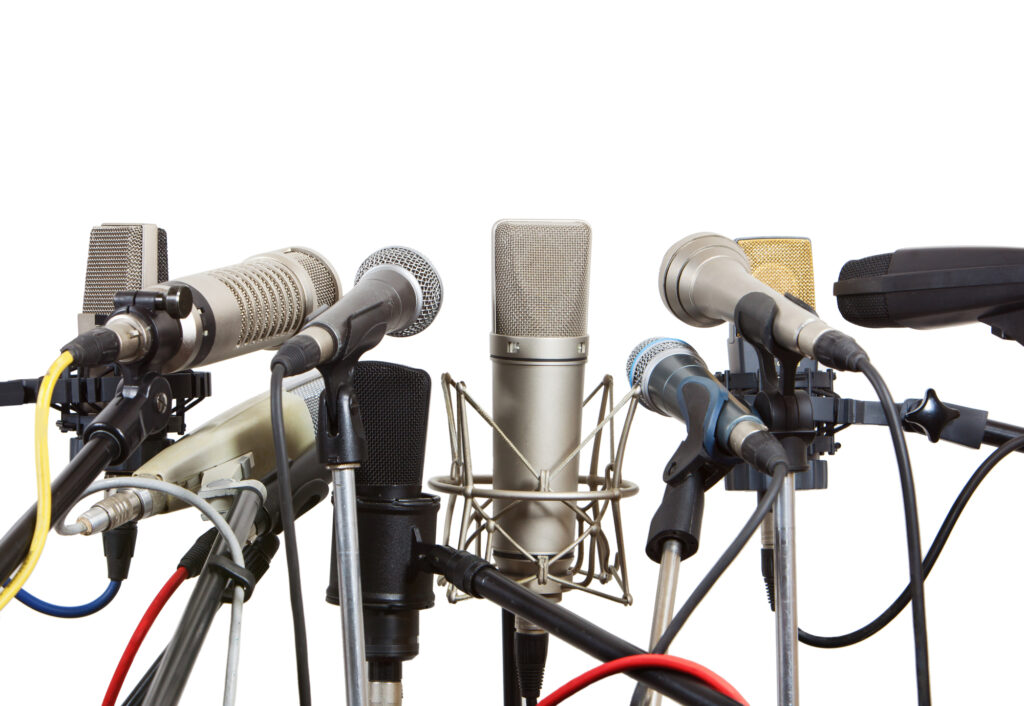
A skilled transcriber can work with difficult sound, but cannot reliably recover words that were never captured. Most recording failures can be prevented before an interview or meeting begins.
Prepare the room and equipment
- Choose an enclosed, quiet room and reduce traffic, fans, phones and nearby conversation.
- Use soft furnishings where possible to limit echo.
- Put the microphone between speakers and never hide it behind a laptop or paperwork.
- For groups, use enough microphones to cover the whole table.
- Record a short test and listen through headphones—not just the device speaker.
Manage the conversation
- Ask people to speak one at a time and identify themselves at the start.
- Give the transcriber a spelling list for names, acronyms and technical terms.
- For online meetings, encourage headsets and stable connections and make an authorised local backup where appropriate.
- Before anyone leaves, confirm the recording saved and retain the untouched original.
A clean source reduces inaudible markers, prevents ambiguity and allows the most economical editing level to be used.